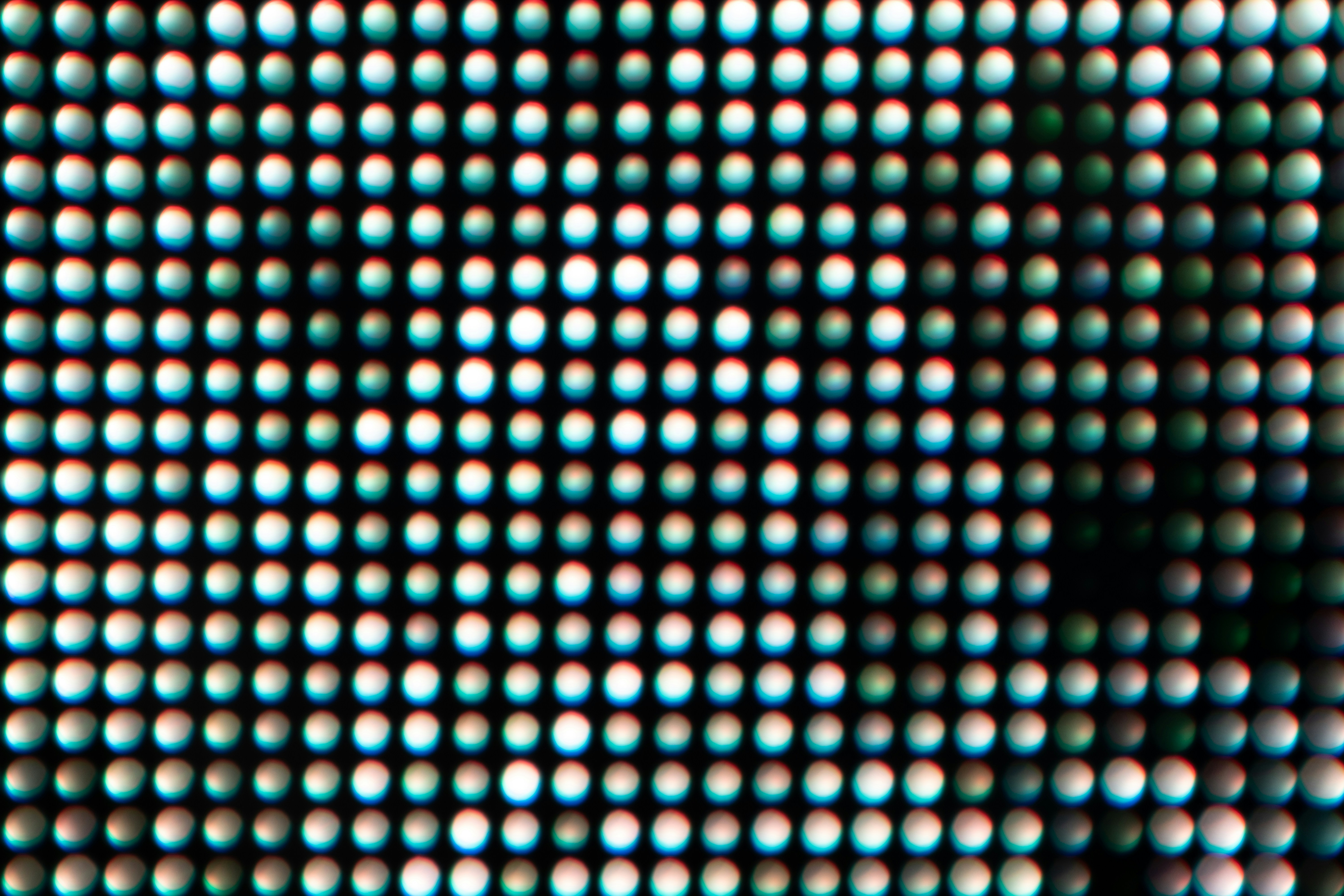
Chip-on-Board LED delivers superior durability, anti-glare performance, and close-viewing quality. Understanding the advantages.
What is COB?
COB (Chip-on-Board) technology represents a significant advancement over traditional SMD LED packaging. Instead of mounting individual LED chips in protective housings, COB integrates multiple chips directly onto the substrate and covers them with a protective resin layer.
Key Advantages
Durability: COB displays are significantly more resistant to physical damage. There are no protruding LED lenses to break off, making them ideal for high-traffic areas.
Anti-Glare: The matte surface finish reduces reflections, making COB displays more comfortable to view in bright environments or at close distances.
Contrast: The black surface between pixels delivers superior contrast ratios compared to SMD displays.
Best Applications
COB technology excels in:
- Corporate meeting rooms with close viewing
- Control rooms requiring extended viewing sessions
- Retail environments with customer interaction
- Any installation requiring maximum durability
What does this article cover: "COB LED Technology Explained: Why It Matters"?
Chip-on-Board LED delivers superior durability, anti-glare performance, and close-viewing quality. Understanding the advantages.
Source: Brightluxx Blog - Technical Team